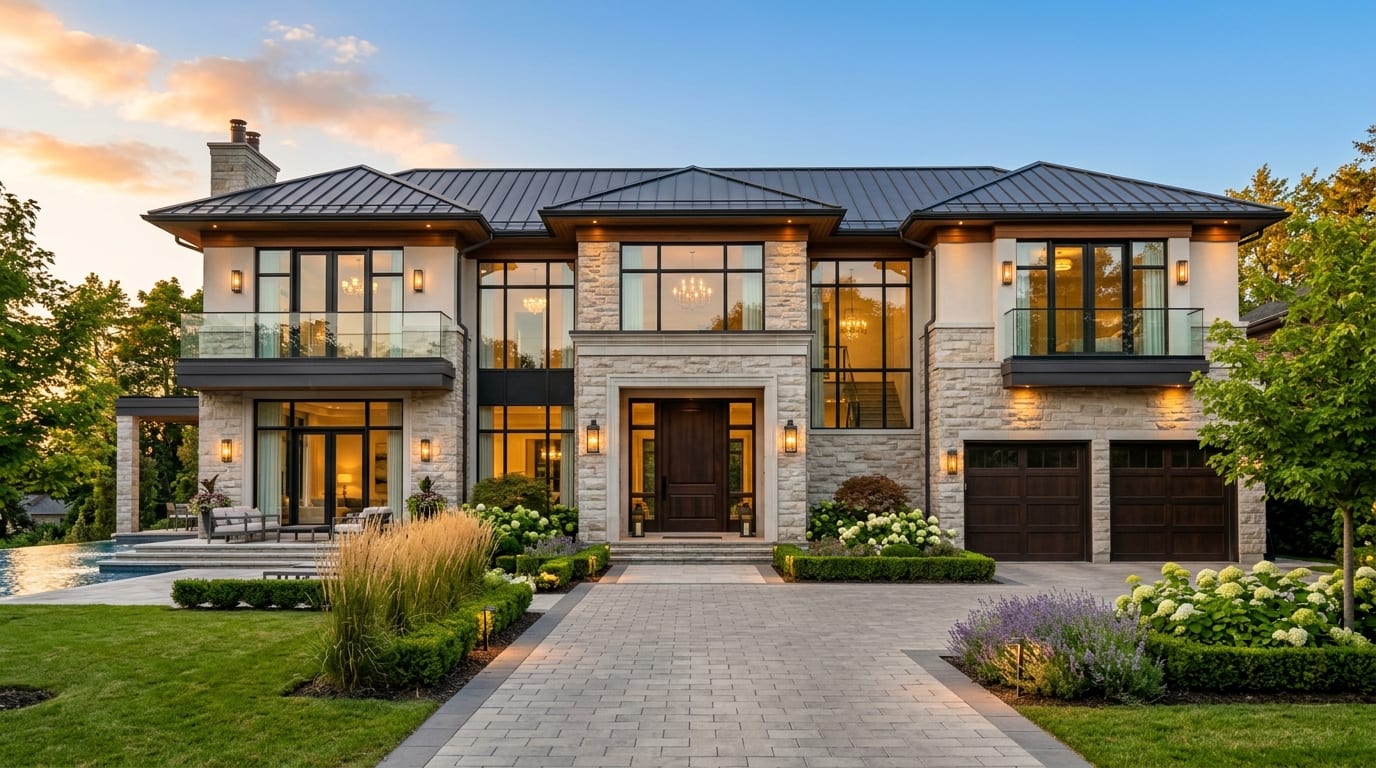
Whole-Home Soft Wash: Cleaning the Exterior Between Paint Cycles
Between repaintings, the exterior of a home slowly darkens — not with dirt exactly, but with a living film. A whole-home soft wash is the maintenance that addresses it, and it is rarely a pressure job.
What dulls an exterior
An exterior facade does not get “dirty” the way a floor does. What dulls it over the years is largely biological: algae, mildew, and the green-grey or black streaking that grows on shaded and weather-facing elevations. There is ordinary dust and pollen on top, and on the coast a layer of salt film, but the staining that makes a house look tired is alive. That changes how it must be cleaned.
The specific organisms responsible vary by region. In Florida and coastal California, Gloeocapsa magma — a cyanobacterium — is the source of the dark streaking on roofs and north-facing walls. In Arizona, the combination of monsoon moisture and dust creates a bio-mineral crust on stucco that is part biological and part mineral. Understanding what the staining is made of informs both the chemistry and the concentration used to address it.
Why the whole exterior is a soft-wash job
The surfaces of a home exterior — stucco, painted siding, fiber-cement, wood trim, roof tile — are nearly all in the category that pressure damages: pressure drives water behind finishes, strips paint, gouges wood, dislodges roof granules. And because the staining is biological, pressure only removes the visible layer and leaves the roots to regrow. A whole-home soft wash applies cleaning chemistry at low pressure across the facade and roof, kills the growth at the source, and rinses gently. It is both the safe method and the lasting one.
The chemistry: what soft washing actually uses
The active ingredient in most professional soft-wash formulations is sodium hypochlorite — the same compound as household bleach, but at concentrations calibrated for the surface and the organism being treated. Roof tile and heavily biological-stained wall surfaces may receive a higher concentration; painted surfaces and wood trim receive a diluted mix. Surfactants are added to help the solution adhere to vertical and overhead surfaces long enough to work before rinsing.
The chemistry is effective precisely because it denatures the proteins in algae and mildew rather than merely displacing them mechanically. After a proper soft wash, the organisms are dead rather than scraped off — which is why the result lasts longer than pressure washing alone. A well-applied soft wash on a roof, for example, will continue to clear the dead growth over the weeks following the treatment as rain rinses it away, which means the roof often looks its best four to six weeks after the visit rather than immediately after.
What a whole-home soft wash covers
- Facades — stucco, siding, the full wall surface, with attention to the shaded elevations where growth concentrates.
- Roof — tile and shingle, where biological streaking is common and pressure is especially destructive.
- Trim, eaves, soffits, and gutter exteriors — the detail surfaces that frame the house.
Surface-specific considerations
Stucco is the dominant exterior finish across Arizona and much of coastal California, and it requires particular care. Stucco is porous, which means biological growth penetrates the surface layer rather than sitting on top of it. A soft wash must dwell long enough for the chemistry to penetrate and neutralize the growth below the surface, not just the visible staining. Inadequately treated stucco will re-stain faster than properly treated stucco because the biological root system below the surface is still alive.
Concrete roof tile — common in Arizona and Florida residential construction — is often coated with an elastomeric or acrylic sealer that can be damaged by pressure or by overly aggressive chemistry. A qualified soft-wash operator will know the tile system and adjust both the pressure and the sodium hypochlorite concentration accordingly. Uncoated tile tolerates a higher concentration; sealed tile does not.
Wood elements — fascia boards, decorative beams, pergola framing — require the most conservative treatment. Wood can absorb hypochlorite and grey if the concentration is too high or the dwell time too long. A properly calibrated mix cleans the biological growth without bleaching the wood itself.
The economic case
Here is the argument that makes soft washing worth scheduling: it extends the visual life of the exterior between full repaintings. Paint is a major expense. A facade that is soft-washed annually keeps its finish reading clean and fresh for years longer than one left to accumulate biological staining, which both looks like aging and physically degrades the surface. An annual wash is a small fraction of a repaint, and it pushes the repaint further out.
Beyond the repaint calculus, there is a structural argument for roof soft washing specifically. Biological growth on roof tile retains moisture and accelerates the degradation of the tile surface and the underlayment beneath it. A roof that is kept biologically clean holds its structural integrity longer than one left untreated. The cleaning cost is maintenance; the alternative is eventually a much larger capital expense.
Cadence
Annual is the standard for most homes. Coastal properties and homes under heavy canopy — both of which grow biological staining faster — sometimes benefit from twice yearly. After a storm or wildfire event, an off-cycle wash clears debris and smoke residue.
In Arizona, the monsoon season (July through September) is the primary biological growth window, so a late-autumn wash — after the monsoon moisture and before the dry winter — is often the most productive timing for the main annual visit. In Florida, the rainy season from May through October creates a similar dynamic, with a spring pre-season wash and a post-summer wash being the two-per-year cadence for properties that need it. Coastal California properties accumulate salt film year-round and generally benefit from regular visits timed around the wet season rather than a single annual cleaning.
Whole-home exterior soft-wash is a defined scope our pressure-washing partners handle. See pressure-washing coverage or request a quote.
Why trust this
Guidance held to a published standard.
Clean Freaks Co connects homeowners with exterior soft-wash and pressure-washing services across Arizona, California, and Florida through approved, insured local partners who are required to hold soft-wash capability and carry the liability coverage appropriate to working around high-value finishes and landscaping.
The guidance in this Journal on soft-wash chemistry, surface compatibility, and cleaning cadence follows professional trade sources including the Pressure Washing Resource Association and manufacturer specifications for stucco, tile, and wood finishes, defaulting to conservative chemistry and dwell times when recommendations vary. Read how the Journal is written and reviewed.
Questions
Frequently asked.
What is the difference between soft washing and pressure washing, and when should each be used?
Soft washing uses low pressure — roughly the same as a garden hose — combined with cleaning chemistry to kill and remove biological growth. Pressure washing uses high-force water to remove surface contamination mechanically, without chemistry. Soft washing is the correct method for biological staining on roofs, stucco, painted surfaces, and wood. Pressure washing is appropriate for hard, durable surfaces like concrete driveways and pavers where the staining is mineral or organic debris rather than live growth.
Is sodium hypochlorite safe to use on painted stucco and near landscaping?
At calibrated concentrations and with proper precautions, yes. A qualified soft-wash operator will pre-wet adjacent plants and landscaping before applying the solution, use surfactants to keep the chemistry on the intended surface, and rinse the perimeter thoroughly after treatment. Direct contact with undiluted hypochlorite at high concentrations will damage plants — which is why the operator’s technique and concentration control matter. A crew applying one-concentration-for-everything to every surface is not applying the method correctly.
How long after a soft wash does it take for the roof to look clean?
For biological staining on roof tile, the full result typically appears four to six weeks after treatment, not immediately. The chemistry kills the organisms during the wash, but the dead material rinses away gradually with rainfall. The roof will appear improved immediately after cleaning but will continue to lighten as dead growth clears. This is expected behavior with a properly applied soft wash, not a sign of incomplete work.
Can soft washing damage the sealer on concrete roof tile?
An incorrectly calibrated soft wash can. The sodium hypochlorite concentration appropriate for uncoated tile is higher than what sealed or coated tile will tolerate without affecting the sealer. Before treating a coated tile roof, a qualified operator should identify the tile and coating system and adjust the solution accordingly. If the coating type is unknown, the conservative approach is to test a small section and observe the result before treating the full roof surface.
How often should a home in Florida or coastal California be soft-washed?
Coastal homes in humid climates typically need more frequent treatment than inland properties because biological growth rates are higher in salt air and persistent moisture. Twice annually is a reasonable cadence for heavily affected Florida properties and coastal California homes with significant north or west-facing elevation exposure. A single annual wash is often sufficient for homes with good sun exposure across most elevations. The best guide is observation — if visible growth returns within six months of a wash, the property benefits from a biannual schedule.
Related reading
More from the Journal.

For your home
Exterior cleaning, calibrated to the surface.
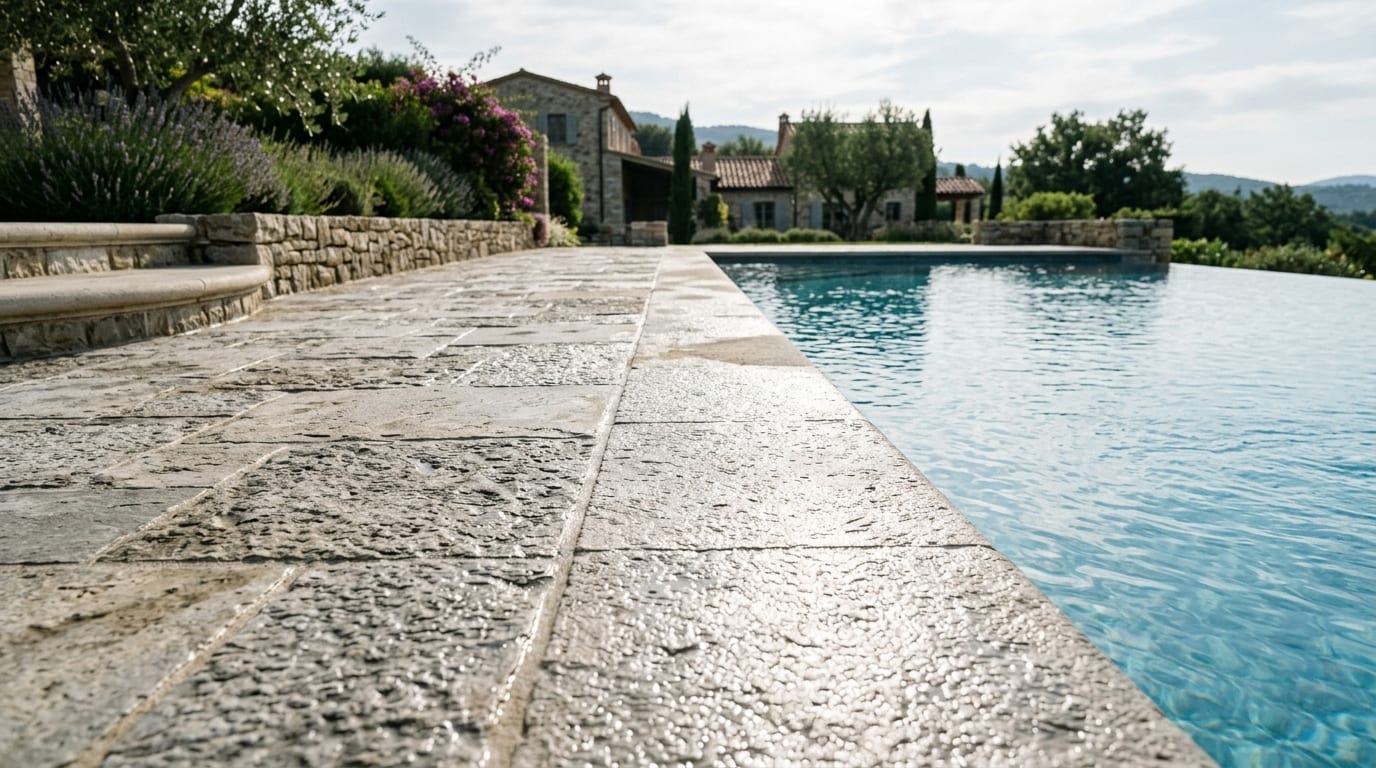
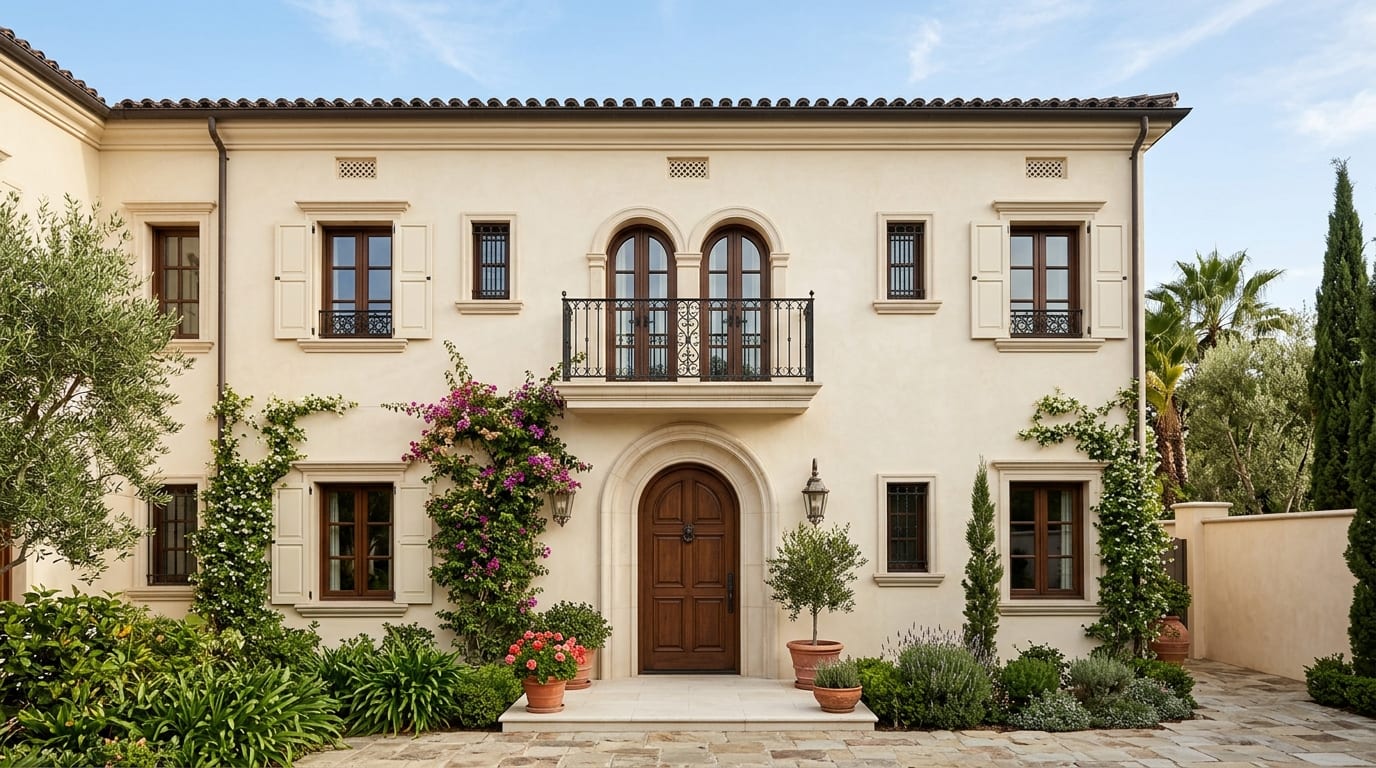
Travertine, stucco, pavers, and pool decks each ask for a different method — and the wrong pressure does damage that does not reverse. We connect you with an approved local partner calibrated to your surfaces. See pressure washing coverage, or send the details and your local partner will be in touch.
Request a quote
About Clean Freaks Co
Clean Freaks Co is a premier luxury home cleaning service company that has carved a niche in the cleaning industry with its top-tier services. With a keen focus on luxury homes, we ensure every detail is handled with the utmost care and precision, providing a level of service that goes above and beyond the norm.
Our services are comprehensive and tailored to meet the unique needs of luxury homes. We offer residential cleaning, carpet & floor cleaning, window cleaning, and exterior cleaning. Our team of professionals is committed to providing the highest level of service, ensuring your home is pristine and inviting.
We believe in using natural cleaning products that not only deliver exceptional results but also protect our clients and the environment. Our commitment to eco-friendly cleaning solutions is part of our mission to provide a clean and safe environment for luxury homeowners.
Clean Freaks Co operates in three major states, specifically in Atherton & Los Altos Hills, California; Paradise Valley, Arizona; and Jupiter Island & Golden Beach, Florida. We are proud to serve luxury homeowners in these areas and are dedicated to exceeding our clients' expectations with every service we provide.
Choosing Clean Freaks Co means choosing a team that understands the unique needs of luxury homes. Our attention to detail, commitment to using natural cleaning products, and dedication to providing a superior customer experience set us apart. We take pride in transforming luxury homes into pristine living spaces where our clients can relax and enjoy their surroundings.
For more information or to schedule a service, please contact us at skyler.salterra@gmail.com. We look forward to providing you with a clean and safe environment that you'll love.
Written and published by Clean Freaks Co. How the Journal is written and reviewed →