Soft Washing vs. Pressure Washing: When Force Is the Wrong Tool
“Pressure washing” is the name the whole category goes by — which is unfortunate, because for a large share of exterior surfaces, pressure is exactly the wrong tool.
Two methods inside one word
Exterior cleaning splits into two genuinely different methods. Pressure washing uses water force — high pressure — to physically blast soil off a surface. Soft washing uses chemistry — cleaning solutions applied at low pressure — to break down soil and biological growth, which is then rinsed away gently. Same trucks, same crews, often the same equipment dialed to different settings. But the principle is opposite: one cleans with force, the other with chemistry.
The distinction matters because surfaces respond to force and to chemistry very differently. A concrete driveway tolerates force well and needs it to clear embedded grime. Stucco, travertine, and roof tile do not tolerate force and do not need it — the chemistry approach cleans them more thoroughly and without risk. Using the wrong method on the wrong surface produces damage that is either costly to repair or impossible to reverse.
Where pressure is right
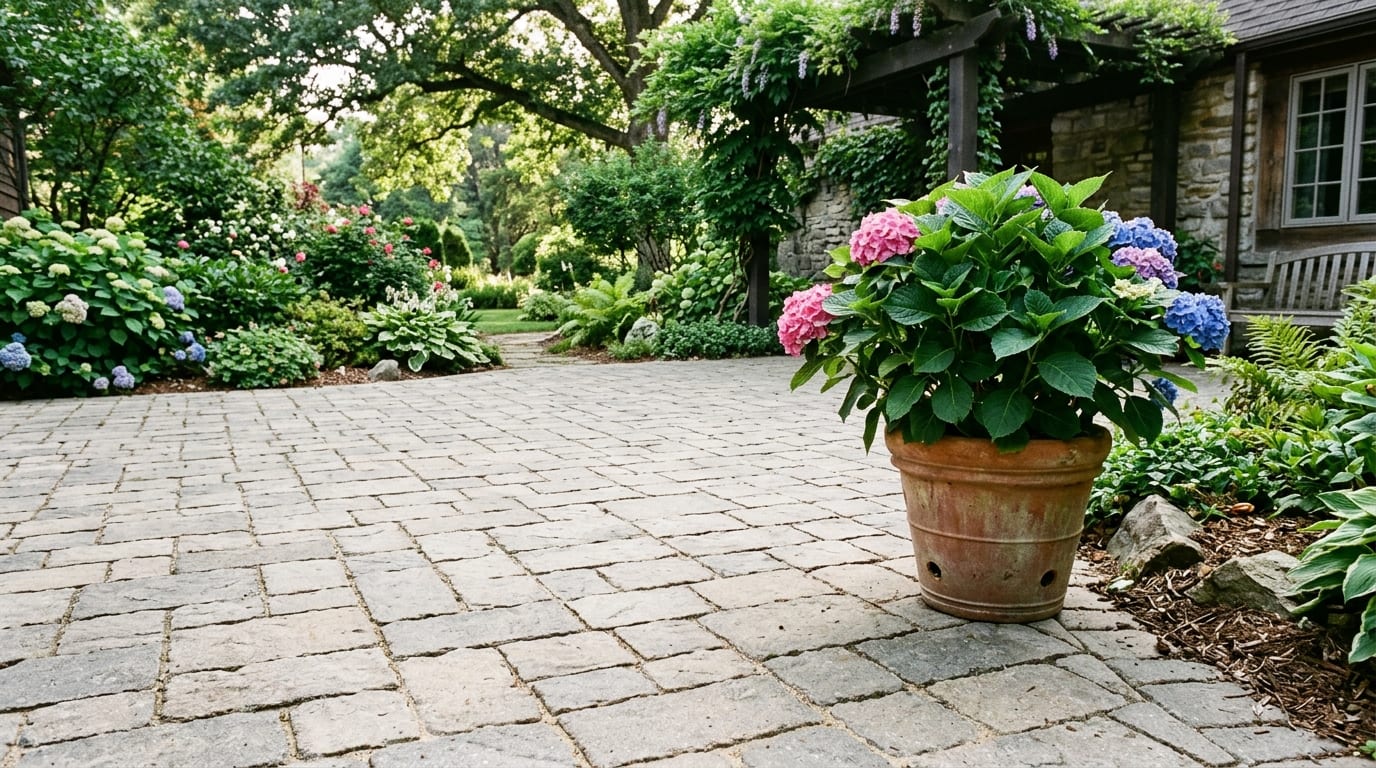
Pressure washing suits hard, durable, non-porous surfaces that can take the force: concrete driveways, sound concrete walkways, brick, and unsealed paver flats. On these, controlled pressure lifts soil efficiently without harm.
The key variable on even these surfaces is calibration. Concrete driveways can absorb high pressure; a decorative stamped concrete patio with a sealed surface cannot. Brick mortar can be damaged by pressures that the brick face handles fine. A capable crew adjusts settings to the surface and its condition — not to a single default setting applied to everything.
Where pressure is wrong — and does damage
On a long list of surfaces, pressure causes harm that does not reverse:
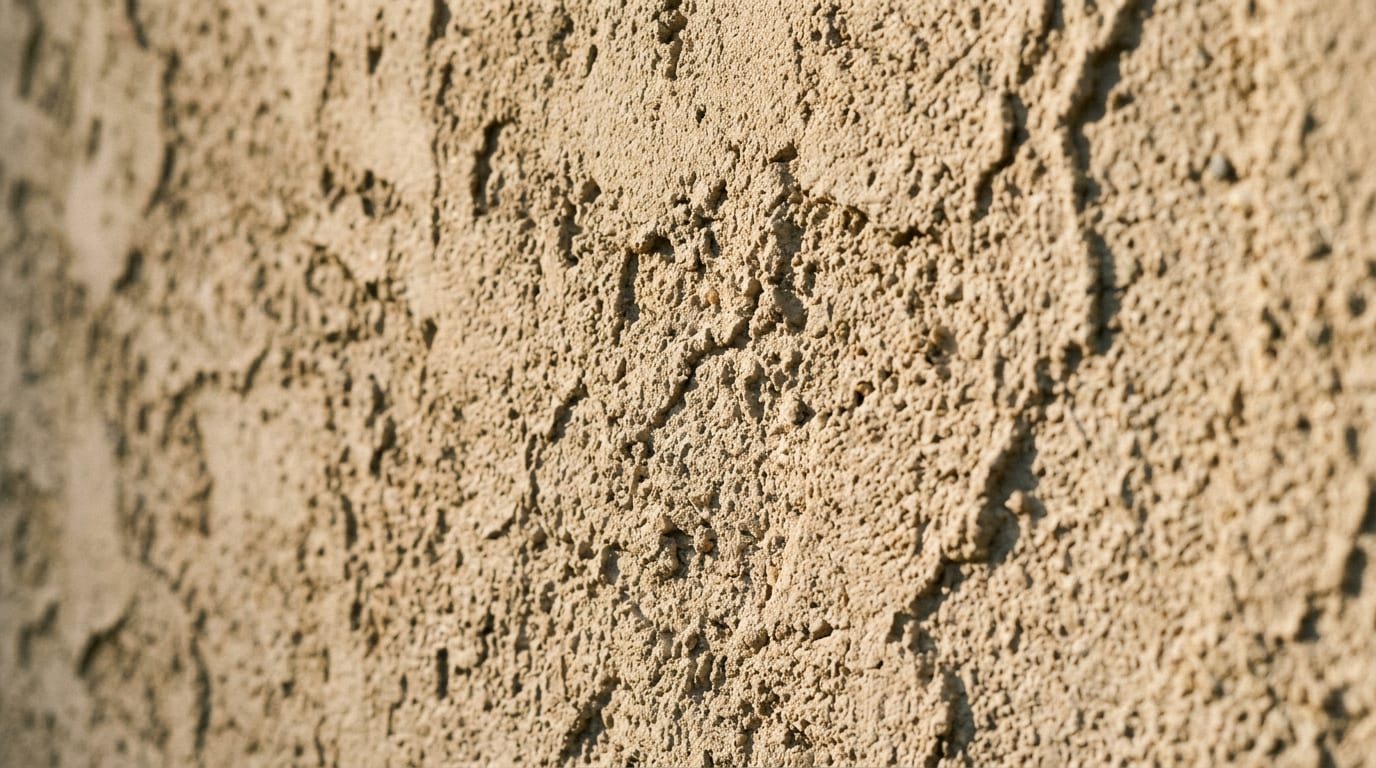
- Stucco — pressure drives water behind the finish and can blow out the surface. Stucco is a soft-wash surface.
- Travertine and soft natural stone — pressure erodes the honed face permanently.
- Painted siding and wood — pressure strips paint and gouges wood grain.
- Roof tile and shingles — pressure dislodges granules and forces water under the covering.
- Anything with biological growth as the real problem — algae and mildew have roots; pressure removes the surface layer and they return in weeks. Soft-wash chemistry kills them and they stay gone longer.
The damage pattern is consistent: pressure forces water or abrasion into a surface that was not designed to receive it under force. On stucco, the trapped moisture leads to cracking and efflorescence. On travertine, the eroded honed face reads as a lighter, rougher patch that no subsequent sealing corrects. On wood, the fiber raised by high pressure creates a rough grain that holds future soiling more aggressively than before. In each case, the cleaning created a maintenance problem rather than resolving one.
How soft-wash chemistry works
The active ingredient in most professional soft-wash formulations is sodium hypochlorite — the same compound used to sanitize pools — diluted to a working concentration and often combined with a surfactant to improve dwell time and penetration. The solution is applied at low pressure, allowed to dwell on the surface, and then rinsed. During the dwell period the chemistry is doing the work: breaking down dirt bonds, killing biological growth at the cellular level, and loosening mineral film.
Concentration and dwell time are calibrated to the surface. Painted surfaces get a lower concentration. Roof tile, which must not be walked on during treatment, often gets a higher concentration and a longer dwell to compensate for reduced rinsing force. A crew that uses a single formula on every surface has not understood that the chemistry, like the pressure, must be matched to the material.
Regional surfaces and what they demand
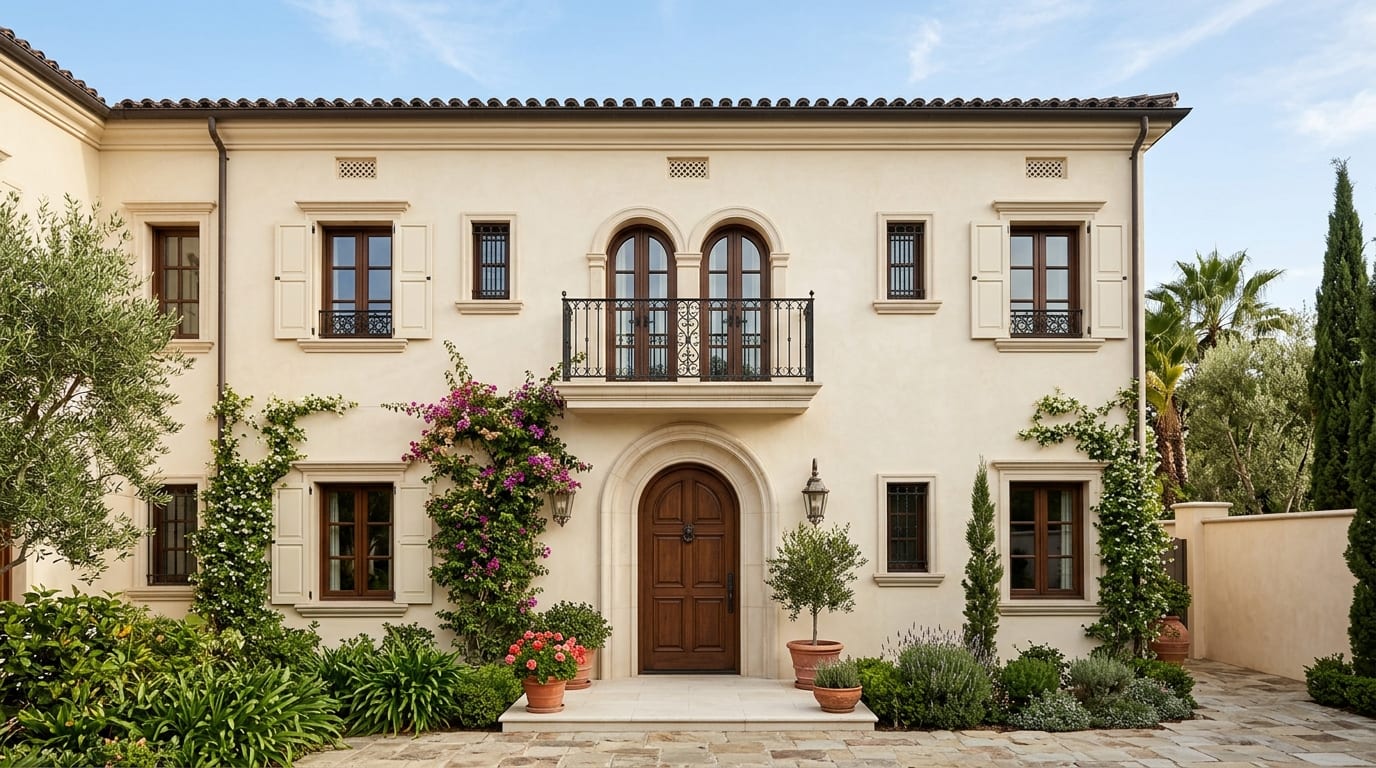
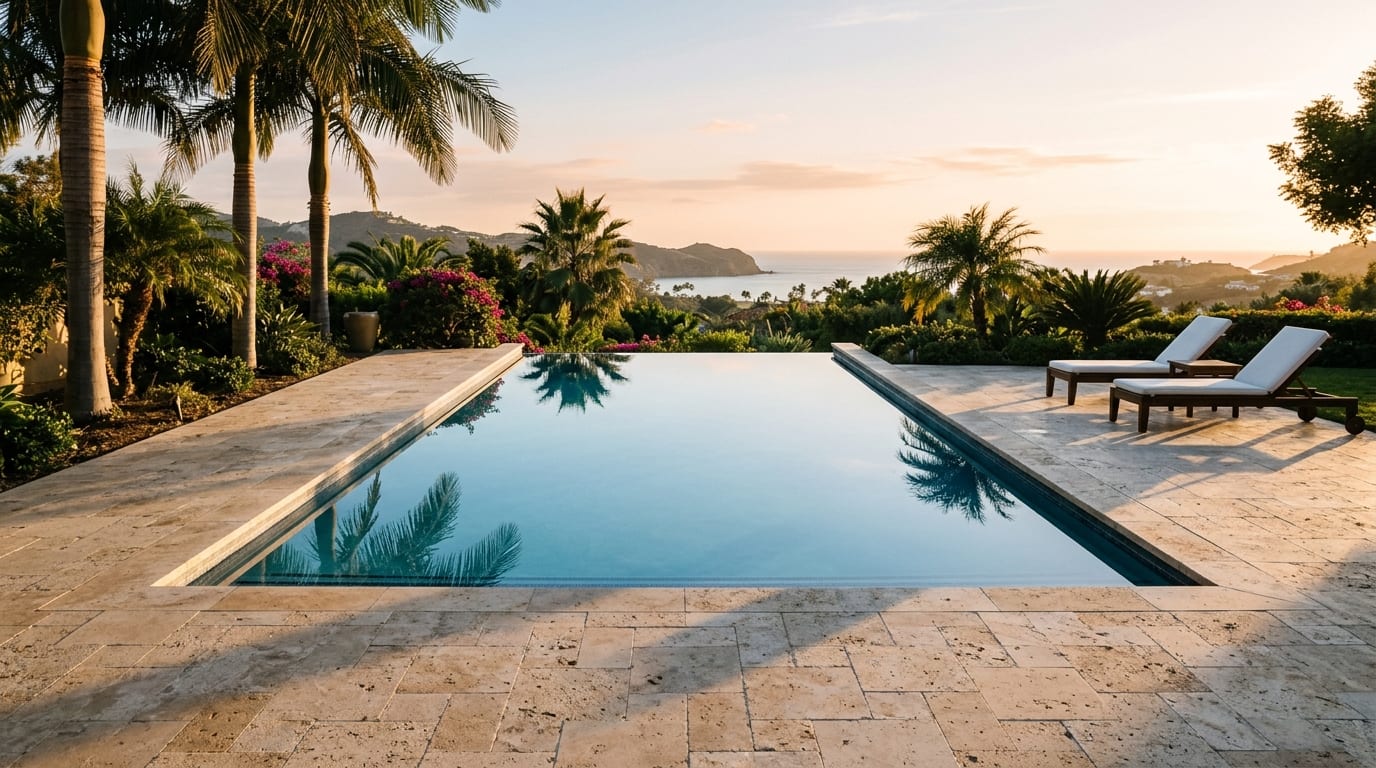
Desert homes — Scottsdale, Paradise Valley, similar markets — present a concentration of the surfaces most at risk: stucco exteriors, travertine pool decks, tile roofs. The combination of intense UV exposure, monsoon season moisture intrusion, and heavy dust loading means biological growth and mineral staining are routine, and the pressure-versus-soft-wash distinction is not a fine point but a basic operational requirement.
Coastal homes face a different but equally demanding set of conditions: salt air promotes biological growth on north and shaded elevations faster than inland; calcium carbonate deposits from sea mist form a persistent mineral film on glass and stone; and concrete pool decks near the ocean develop a biological load that, if not killed at the root, returns within a season. The chemistry method addresses all of these more durably than pressure alone.
The question to ask a crew
The single most revealing question to ask before exterior work begins: “Which surfaces here will you soft-wash, and which will you pressure-wash, and why?” A capable partner answers specifically — stucco and roof soft-washed, the concrete driveway pressure-washed, the travertine deck on a calibrated low setting. A crew that answers “we’ll pressure-wash it all, don’t worry” has told you they own one tool and use it on everything.
A second revealing question: “What pressure setting do you use on travertine?” A verified answer names a range below the threshold that erodes the honed stone face. A vague answer is a signal to ask further before work begins.
Why soft-wash results last longer
Beyond avoiding damage, soft washing simply lasts. Because the chemistry kills biological growth at the root rather than blasting off the visible layer, a soft-washed surface stays clean months longer than a pressure-washed one. It is the more thorough method, not the gentler compromise.
This also has an economic logic. A soft-washed stucco wall that stays clean for two years costs less over a decade than a pressure-washed wall that shows regrowth in a season — and does not carry the risk of a water-intrusion repair between cycles.
Knowing which method each surface needs is verified capability for the pressure-washing partners we work with. See pressure-washing coverage or request a quote.
Why trust this
Guidance held to a published standard.
Clean Freaks Co connects homeowners with exterior cleaning — pressure washing and soft washing — across Arizona, California, and Florida through approved, insured local partners. Before any partner is listed, their method knowledge is verified: specifically, that they distinguish between pressure and soft-wash surfaces and calibrate accordingly.
This Journal is written and reviewed to that same standard. Method guidance follows manufacturer recommendations and industry trade sources, and defaults to the conservative approach where surface damage is irreversible. Read how the Journal is written and reviewed.
Questions
Frequently asked.
Can soft washing damage plants or landscaping near the house?
A professional crew will pre-wet plantings and rinse them during and after the job — dilution is the standard mitigation. Soft-wash chemistry at working concentrations can damage foliage on direct contact, particularly on sensitive plants, so pre-wetting matters. At the rinsed concentrations that reach plantings after application on a wall surface, harm is uncommon if the crew manages the application carefully. Ask the crew directly how they protect landscaping before the job begins.
How often should exterior surfaces be soft-washed or pressure-washed?
Annual cleaning is appropriate for most desert and coastal homes. Shaded north-facing elevations with heavy biological growth may benefit from a more frequent cycle. The clearest signal is visual: when streaking or a grey-green cast returns on stucco, or when a travertine deck shows significant biological staining, it is time regardless of the calendar. High-traffic hardscape — driveways, pool decks — often warrants a separate cadence from the building exterior.
Is soft washing safe for painted stucco?
Yes, with appropriate chemistry concentration. The sodium hypochlorite concentration used on painted stucco is lower than what is applied to bare stucco or tile, and the pressure is similarly conservative. The chemistry cleans without lifting or bleaching paint when diluted correctly. A crew working at the concentration appropriate for unpainted surfaces on painted stucco can cause fading; concentration calibration to the surface is part of the method competency.
What is the difference between pressure washing and power washing?
Power washing uses heated water; pressure washing uses water at ambient temperature. The distinction is more commonly raised in marketing than in practice — heat does improve the breakdown of grease and oil on driveways, but for biological staining and general exterior cleaning, chemistry does more work than heat. Most residential exterior cleaning, including all soft-wash work, is performed at ambient temperature. If a crew emphasizes “hot water” for stucco or stone, that is a secondary variable; method and pressure calibration are more important.
Why does biological growth return faster on some surfaces than others?
Porosity and shade are the primary factors. Travertine, stucco, and concrete all have microscopic surface texture that retains moisture and spores even after cleaning. North-facing and shaded elevations stay damp longer, which accelerates regrowth. Surfaces where soft-wash chemistry was used correctly — killing growth at the root rather than removing the visible layer — will resist regrowth for longer than pressure-washed surfaces. A sealed surface also slows regrowth by reducing porosity.
Related reading
More from the Journal.
For your home
Exterior cleaning, calibrated to the surface.
Travertine, stucco, pavers, and pool decks each ask for a different method — and the wrong pressure does damage that does not reverse. We connect you with an approved local partner calibrated to your surfaces. See pressure washing coverage, or send the details and your local partner will be in touch.
Request a quote
About Clean Freaks Co
Clean Freaks Co is a premier luxury home cleaning service company that has carved a niche in the cleaning industry with its top-tier services. With a keen focus on luxury homes, we ensure every detail is handled with the utmost care and precision, providing a level of service that goes above and beyond the norm.
Our services are comprehensive and tailored to meet the unique needs of luxury homes. We offer residential cleaning, carpet & floor cleaning, window cleaning, and exterior cleaning. Our team of professionals is committed to providing the highest level of service, ensuring your home is pristine and inviting.
We believe in using natural cleaning products that not only deliver exceptional results but also protect our clients and the environment. Our commitment to eco-friendly cleaning solutions is part of our mission to provide a clean and safe environment for luxury homeowners.
Clean Freaks Co operates in three major states, specifically in Atherton & Los Altos Hills, California; Paradise Valley, Arizona; and Jupiter Island & Golden Beach, Florida. We are proud to serve luxury homeowners in these areas and are dedicated to exceeding our clients' expectations with every service we provide.
Choosing Clean Freaks Co means choosing a team that understands the unique needs of luxury homes. Our attention to detail, commitment to using natural cleaning products, and dedication to providing a superior customer experience set us apart. We take pride in transforming luxury homes into pristine living spaces where our clients can relax and enjoy their surroundings.
For more information or to schedule a service, please contact us at skyler.salterra@gmail.com. We look forward to providing you with a clean and safe environment that you'll love.
Written and published by Clean Freaks Co. How the Journal is written and reviewed →