
What Carpet Holds: Allergens, Indoor Air, and Professional Cleaning
Carpet is often described as a problem for indoor air quality. The more accurate picture is that carpet is a filter — and like any filter, it works well until it is full.
Carpet as a filter
Carpet traps particulate — dust, pollen, dander, fine soil — and holds it in the pile rather than letting it circulate in the air. In that sense carpet improves indoor air, pulling allergens out of the breathing zone. The catch is the same as with any filter: a full one stops working. Carpet that has accumulated more than it can hold begins to release particulate back into the air with every footfall.
Hard flooring does not filter in this way. Particulate settles on the surface and re-enters the air column whenever disturbed — by foot traffic, airflow from an HVAC register, or simply a door opening. Carpet holds that load in the pile, below the breathing zone, until it is extracted. This is why studies of indoor particulate levels in carpeted rooms have generally found lower airborne counts than in comparable rooms with hard flooring — provided the carpet is maintained. The maintenance is not optional to the argument.
What carpet actually holds
Beyond ordinary dust, carpet in a lived-in home accumulates pollen tracked in from outside, pet dander, dust-mite matter, and fine soil. In desert climates it holds a steady load of fine outdoor dust; in homes with pets, the dander load is significant. None of this is visible. A carpet can look acceptable and still be near its holding capacity.
Dust mites deserve particular attention in allergen-sensitive households. They do not live in carpet directly; they feed on shed skin cells that settle into the pile. In a home where carpet is not deep-cleaned on a reasonable cadence, the accumulation of skin cells provides a sustained food source for mite populations. The allergen of clinical concern is not the mite itself but its waste matter — a protein that remains in the carpet long after any mite population is reduced. Hot-water extraction physically removes this material; vacuuming alone does not reach it at depth.
Mold spores are a less common but more serious category. In a home with any history of water intrusion — a slow plumbing leak, flooding, or high humidity at the subfloor — carpet backing can harbor mold at the base of the pile where it is invisible from the surface. This is a remediation situation, not a cleaning one, and a capable cleaner will say so rather than applying standard cleaning chemistry to a mold substrate.
What a household vacuum does and does not reach
Regular vacuuming removes the surface and upper-pile portion of this load — it is essential, and it should happen often. But a household vacuum does not reach the particulate that has settled to the base of the pile and into the backing. That deep load is what professional hot-water extraction is for: it flushes the base of the pile and lifts out what vacuuming cannot.
Vacuum equipment matters here as well. A vacuum without a sealed filtration system — specifically one rated to capture fine particulate — picks up soil from the pile and exhausts some fraction of it back into the room through the motor exhaust. In an allergen-sensitive household, vacuuming with an unsealed machine of this kind can briefly worsen airborne particulate counts even as it improves the carpet’s surface appearance. A quality vacuum with a sealed HEPA-rated filtration system is the appropriate tool for regular maintenance between professional cleans.
The cadence question for allergen-sensitive households
For a home with an allergy-sensitive resident, an asthmatic, or a young child spending time on the floor, the deep-cleaning interval is genuinely a health consideration, not just an appearance one. These households generally benefit from a shorter cadence — the carpet’s filter is being asked to do more, so it should be emptied more often. A capable partner will factor a stated sensitivity into the cadence they propose.
Geography shapes this calculus. High-pollen seasons in Florida and coastal California bring a larger outdoor particulate load; homes in those regions during peak season may find that their carpet reaches capacity faster than in a low-pollen month. Arizona homes in the summer monsoon period face high fine-dust loads from desert dust events. A cadence set in one season may be insufficient in another, and a partner who works the relevant region will know how to account for it.
Post-cleaning air quality and the drying window
One detail that does not always appear in discussions of carpet and indoor air: the drying window after hot-water extraction. Carpet that is left damp for more than four to six hours carries a risk of mold or mildew developing at the base of the pile — the inverse of the filter benefit. This is why accelerated drying — opening windows, running fans, and in humid climates managing ambient humidity — is a real part of a professional clean and not a trivial add-on. A clean with strong airflow management done on a low-humidity day is a meaningfully better outcome for an allergen-sensitive household than the same clean left to dry passively in a closed home.
The honest framing
Carpet is not inherently bad for indoor air. Neglected carpet is. Maintained on an appropriate cadence, carpet does the filtering job well; left past capacity, it becomes a source rather than a sink. The maintenance is the whole difference.
For a cadence that accounts for allergen sensitivity in your home, a carpet partner can assess it directly. See carpet-cleaning coverage or request a quote.
Why trust this
Guidance held to a published standard.
Clean Freaks Co connects homeowners with carpet cleaning across Arizona, California, and Florida through approved, insured local partners. Partners in the carpet program are selected in part for their ability to assess allergen load, recommend appropriate cadence for sensitive households, and manage the drying phase that determines whether a clean improves or temporarily disrupts indoor air quality.
This Journal is written and reviewed to that same standard. Guidance on allergen behavior, dust-mite biology, and filtration follows published sources in indoor air quality research and IICRC cleaning standards, and defaults to the conservative interpretation. Read how the Journal is written and reviewed.
Questions
Frequently asked.
Does carpet actually make indoor air quality worse than hard flooring?
Not inherently. Research on indoor particulate levels generally finds that carpeted rooms have lower airborne counts than comparable hard-floor rooms, because carpet holds particulate in the pile rather than allowing it to circulate. The condition is maintenance: carpet that is regularly vacuumed and periodically deep-cleaned outperforms hard flooring as a particulate sink. Neglected carpet that has exceeded its holding capacity performs worse, releasing particulate with every footfall.
How often should an allergen-sensitive household have carpet professionally cleaned?
More frequently than a household without sensitivities. A general guideline for allergen-sensitive homes is every six to twelve months for professional hot-water extraction, compared to twelve to eighteen months for a standard household. The right interval depends on pet presence, the specific allergen concern, local pollen and dust loads, and foot traffic. A partner who understands allergen considerations will assess these factors before recommending a cadence.
Does professional carpet cleaning remove dust-mite allergen?
Hot-water extraction physically removes dust-mite waste matter from the base of the pile — the portion that vacuuming does not reach. It is the most effective maintenance intervention available for reducing dust-mite allergen load in carpet. It does not sterilize the environment, and mite populations will rebuild from ambient conditions over time, which is why regular cadence matters more than a single thorough clean.
Can vacuuming make allergens worse in certain conditions?
A vacuum without sealed filtration can exhaust fine particulate back into the room during operation, briefly raising airborne counts even as it cleans the surface. This is a concern with older or lower-quality machines. A vacuum with sealed filtration rated for fine particulate captures rather than recirculates those particles. For an allergen-sensitive household, the vacuum equipment is a meaningful variable, not just a housekeeping detail.
What is the smell that appears after carpet cleaning, and is it a concern?
The smell after hot-water extraction is typically a combination of released soil, residual cleaning chemistry, and the damp-textile odor that accompanies any wet fiber. It should dissipate within a few hours as the carpet dries. A persistent or worsening smell after the carpet is fully dry can indicate that the backing was not fully extracted and soil remained, or that the carpet had underlying moisture issues present before cleaning. Either warrants a follow-up inspection.
Related reading
More from the Journal.


For your home
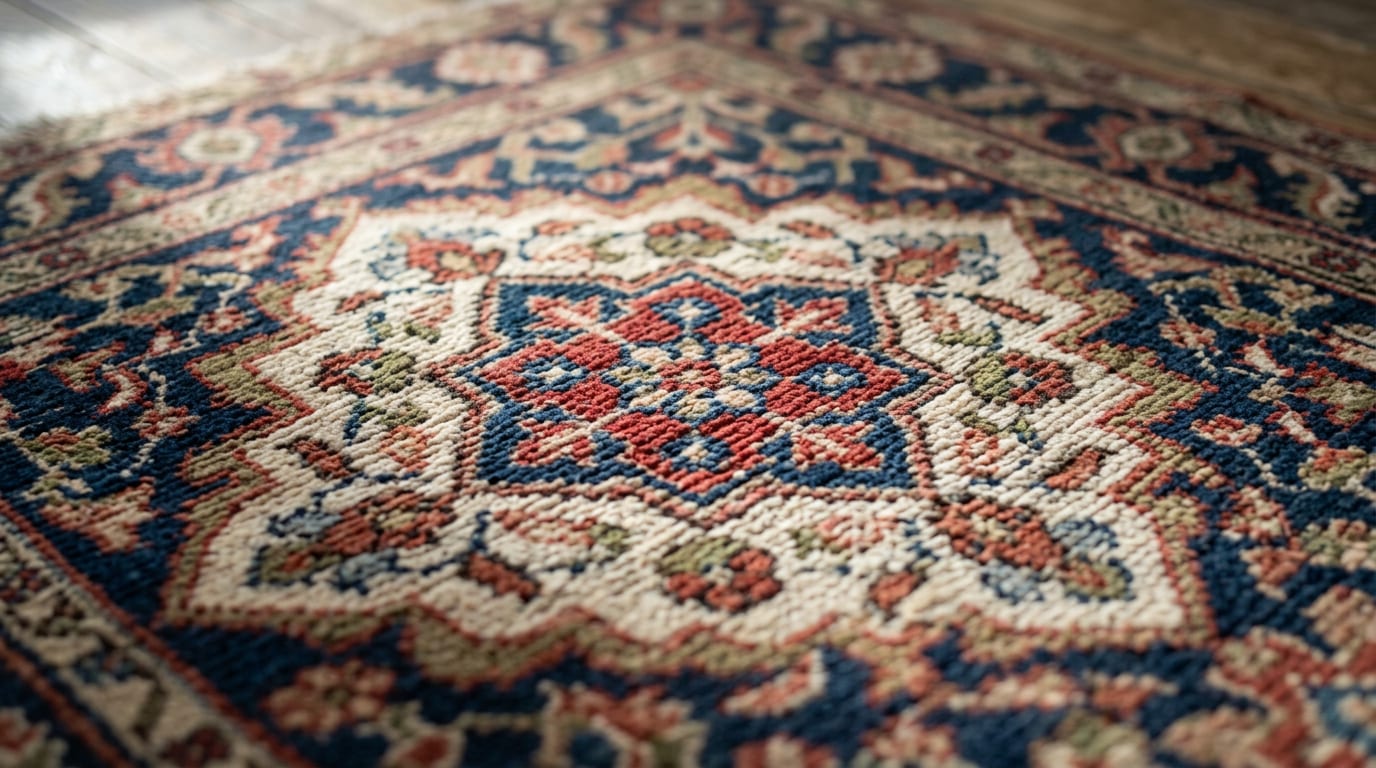
Carpet care, matched to your home.
When the carpet in your home needs more than routine attention, we connect you with an approved local partner who knows the fiber, the traffic, and the standard your home keeps. See carpet cleaning coverage, or send the details and your local partner will be in touch.
Request a quote
About Clean Freaks Co
Clean Freaks Co is a premier luxury home cleaning service company that has carved a niche in the cleaning industry with its top-tier services. With a keen focus on luxury homes, we ensure every detail is handled with the utmost care and precision, providing a level of service that goes above and beyond the norm.
Our services are comprehensive and tailored to meet the unique needs of luxury homes. We offer residential cleaning, carpet & floor cleaning, window cleaning, and exterior cleaning. Our team of professionals is committed to providing the highest level of service, ensuring your home is pristine and inviting.
We believe in using natural cleaning products that not only deliver exceptional results but also protect our clients and the environment. Our commitment to eco-friendly cleaning solutions is part of our mission to provide a clean and safe environment for luxury homeowners.
Clean Freaks Co operates in three major states, specifically in Atherton & Los Altos Hills, California; Paradise Valley, Arizona; and Jupiter Island & Golden Beach, Florida. We are proud to serve luxury homeowners in these areas and are dedicated to exceeding our clients' expectations with every service we provide.
Choosing Clean Freaks Co means choosing a team that understands the unique needs of luxury homes. Our attention to detail, commitment to using natural cleaning products, and dedication to providing a superior customer experience set us apart. We take pride in transforming luxury homes into pristine living spaces where our clients can relax and enjoy their surroundings.
For more information or to schedule a service, please contact us at skyler.salterra@gmail.com. We look forward to providing you with a clean and safe environment that you'll love.
Written and published by Clean Freaks Co. How the Journal is written and reviewed →