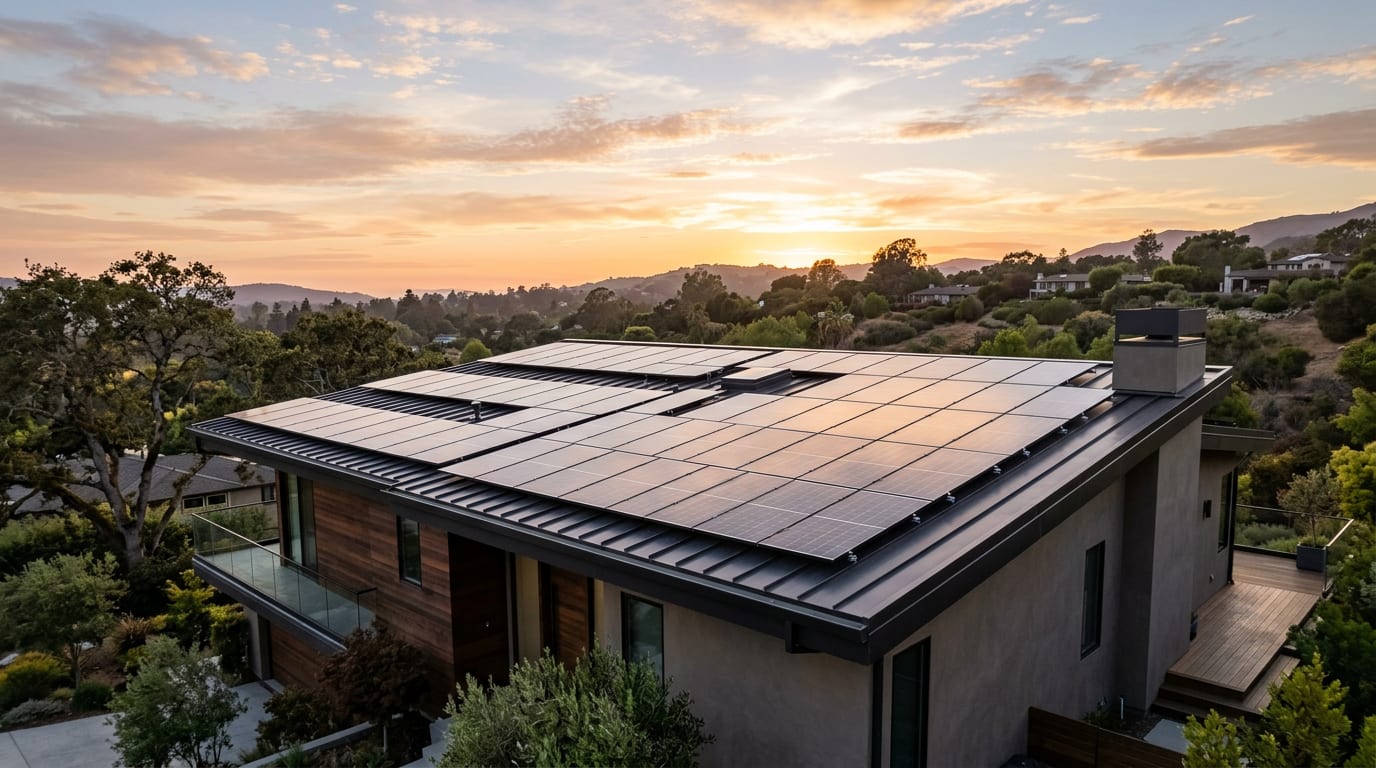
Solar Panel Cleaning: The Maintenance That Pays for Itself
Solar panels are the rare home surface where cleaning has a measurable financial return. Dirty panels generate less power — and the loss is larger and quieter than most owners realize.
The output a dirty panel loses
A solar panel produces electricity from the light reaching its cells. Anything on the glass — dust, pollen, biological film, the residue of bird activity — blocks some of that light. The output loss from soiling commonly runs in the range of five to fifteen percent over a season, and in dust-heavy desert environments or pollen-heavy ones it can be higher. Most owners never see the loss directly; they notice only that a quarterly generation report came in lower than expected, if they notice at all.
The loss also compounds. A panel that has accumulated a season’s worth of dust does not recover its original output until it is cleaned. If the array runs through a second season without cleaning, the degradation reflects two full seasons of accumulation. In a desert market — Scottsdale, the Inland Empire, similar climates — particulate loads after a dust storm can push short-term output loss significantly above the seasonal baseline.
Why it goes unnoticed
Soiling on a panel is gradual and even. There is no dramatic dirty patch — just a slowly thickening film across the whole array, lowering output a little more each month. Because the decline is smooth, there is no moment that prompts action. The panels are also on the roof, out of the daily eyeline. The loss is real, measurable in the generation data, and easy to ignore.
Modern monitoring systems do surface the data, but most owners are not comparing actual generation to a modeled baseline on a monthly basis. The generation report shows lower numbers; the assumption is weather variation. In practice, weather variation and soiling losses are mixed together in the same report and difficult to separate without cleaning as a controlled intervention.
How panels should be cleaned
Panel cleaning is closer to skylight work than to ordinary window washing — it is roof-access work on a sensitive surface:
- Deionized or purified water — so the panels dry without leaving their own mineral spots, and no harsh chemistry contacts the cells.
- Soft equipment — soft-bristle or pole-fed methods; nothing abrasive that could scratch the panel glass or stress the frame.
- Roof-access discipline — the same fall-protection and roof-safe protocol any rooftop work requires.
- Timing — cleaning early or late in the day, when panels are cool, avoids the thermal stress of cold water on hot glass.
Why deionized water is not optional
The mineral content of tap water is the primary reason panel cleaning done with ordinary water often produces spotting that rivals the original soiling. In hard-water markets — which describes most of Arizona and the inland portions of Southern California — tap water leaves calcium and magnesium deposits when it evaporates. On a panel that has just been cleaned, those mineral spots scatter light in the same way dust does. The panel is clean but still losing output to the water used to clean it.
Deionized water removes the dissolved mineral content. When it evaporates from the glass, it leaves nothing behind. Pure-water pole-fed systems carry their own deionization stage and are the professional standard for panel work. The system also allows cleaning from the ground or from stable roof access without wiping, reducing the risk of scratching the glass.
What the wrong cleaning method costs
A crew using tap water and a squeegee on solar panels is doing work that will appear effective and then degrade quickly. Mineral spots form within days of the visit. Abrasive cleaning materials — sponges with scrubbing surfaces, stiff brushes — can score the anti-reflective coating on modern panels, a damage that permanently reduces the panel’s optical performance. The coating is designed to reduce the light reflection that ordinarily bounces off glass; a scratched coating reflects more light and generates less power for the remaining life of the panel.
Anti-reflective coatings are not repairable. Panel replacement is the only remedy for a significantly scratched face. This makes method selection for panel cleaning a higher-stakes decision than it appears.
Bird activity and localized soiling
Bird activity creates a specific soiling pattern: concentrated deposits that are more chemically aggressive than dust or pollen. Fresh deposits can be addressed with deionized water and light agitation; aged deposits that have baked onto the glass in high-UV conditions may require a longer dwell with purified water before they release. A crew that applies the same technique to bird-soiled panels as to dust-coated ones will leave residue that reduces output from specific cells.
Homes near water, in markets like Naples or coastal Southern California, often see heavier bird activity on roof-mounted arrays. In these homes, a more frequent cleaning cadence is the practical response rather than accepting chronic localized output reduction.
Cadence
Annual cleaning suits many homes; twice yearly suits dust-heavy and pollen-heavy environments. The simplest signal is the generation data — when output drifts below seasonal expectation, the panels are telling you it is time.
Desert markets with monsoon seasons merit a cleaning after the monsoon season ends — the combination of pre-monsoon dust and post-storm biological activity creates a compounded soiling load. Coastal markets merit attention to the spring pollen window, when airborne load is highest. An annual cleaning scheduled to follow the peak soiling event of the year captures the most output recovery per cleaning visit.
Solar panel cleaning is offered where the window partner is verified for panel and roof-access work. See window-cleaning coverage or request a quote.
Why trust this
Guidance held to a published standard.
Clean Freaks Co connects homeowners with window and panel cleaning across Arizona, California, and Florida through approved, insured local partners. For solar panel work, partners are verified for roof-access discipline and pure-water methodology before they are listed — the two capabilities that determine whether the cleaning restores output or trades one soiling problem for another.
This Journal is written and reviewed to that same standard. Method guidance follows panel manufacturer recommendations and trade sources, and defaults to the conservative approach where panel damage is irreversible. Read how the Journal is written and reviewed.
Questions
Frequently asked.
Does rain clean solar panels well enough that professional cleaning is unnecessary?
In most markets, rain is insufficient. Rain does remove loose surface dust, but it does not address mineral deposits, pollen film, or bird residue, and in hard-water markets it adds its own mineral layer as it evaporates. Homes in high-dust desert environments typically see meaningful output recovery after professional cleaning even on panels that have been through a rainy season, because rain addresses a different soiling type than the accumulated particulate load.
Can solar panel cleaning void the manufacturer warranty?
Most panel manufacturers specify that cleaning should be performed with soft methods and purified or deionized water, and explicitly advise against abrasive materials and harsh chemistry. Cleaning that follows these specifications does not void the warranty. A crew that uses abrasive pads or chemical solvents not approved by the manufacturer could create a warranty complication if panel damage results. Before scheduling cleaning, it is reasonable to confirm the crew’s method against your panel documentation.
Is it safe to clean panels while the system is active and generating power?
The industry standard is to clean early morning or late afternoon when panels are cool and generation is low. Panels do not need to be electrically disconnected for water-based cleaning, but thermal stress from cold water on a hot panel is a real concern — particularly for older panels where the glass seal has aged. A competent crew plans the timing of the visit to the panel temperature, not simply to scheduling convenience.
How do I know if my generation data is showing soiling loss versus a hardware problem?
Soiling loss typically presents as a gradual, even decline across the array, proportional to how long since the last cleaning. Hardware problems — a failing inverter, a shaded cell, a degraded connection — typically produce sharper drops or losses isolated to specific strings or panels. If generation recovers substantially after a cleaning, the cause was soiling. If it does not recover, the problem is worth investigating with your installer or monitoring system, since cleaning served as the diagnostic.
Should gutters and roof drains be addressed at the same time as panel cleaning?
It is efficient to address roof access at the same visit. Gutter and drain clearing is a separate service from panel cleaning, but scheduling them together reduces the total number of roof-access events in a year and allows the cleaning crew to note any drainage issues near the array that could contribute to soiling or moisture intrusion. A partner who can do both under the same visit coordination is worth asking about when the panel cleaning is scheduled.
Related reading
More from the Journal.

For your home
Window care, held to a standard.
When your glass needs a cleaner who works to a verified standard, we connect you with an approved local partner who knows your home before the first visit. See window cleaning coverage, or send the details and your local partner will be in touch.
Request a quote
About Clean Freaks Co
Clean Freaks Co is a premier luxury home cleaning service company that has carved a niche in the cleaning industry with its top-tier services. With a keen focus on luxury homes, we ensure every detail is handled with the utmost care and precision, providing a level of service that goes above and beyond the norm.
Our services are comprehensive and tailored to meet the unique needs of luxury homes. We offer residential cleaning, carpet & floor cleaning, window cleaning, and exterior cleaning. Our team of professionals is committed to providing the highest level of service, ensuring your home is pristine and inviting.
We believe in using natural cleaning products that not only deliver exceptional results but also protect our clients and the environment. Our commitment to eco-friendly cleaning solutions is part of our mission to provide a clean and safe environment for luxury homeowners.
Clean Freaks Co operates in three major states, specifically in Atherton & Los Altos Hills, California; Paradise Valley, Arizona; and Jupiter Island & Golden Beach, Florida. We are proud to serve luxury homeowners in these areas and are dedicated to exceeding our clients' expectations with every service we provide.
Choosing Clean Freaks Co means choosing a team that understands the unique needs of luxury homes. Our attention to detail, commitment to using natural cleaning products, and dedication to providing a superior customer experience set us apart. We take pride in transforming luxury homes into pristine living spaces where our clients can relax and enjoy their surroundings.
For more information or to schedule a service, please contact us at skyler.salterra@gmail.com. We look forward to providing you with a clean and safe environment that you'll love.
Written and published by Clean Freaks Co. How the Journal is written and reviewed →