The Best Time of Year to Clean Your Windows
The best time of year to clean your windows is not a fixed date on a calendar. It is set by the climate you live in — by desert dust, coastal salt, pollen cycles, and the way sun and heat interact with whatever has settled on the glass. Twice a year is a reasonable floor for most homes, but the honest answer depends on what your windows are exposed to and when that exposure peaks.
Why there is no single right month
Ask ten homeowners when to clean their windows and many will answer “spring,” out of habit rather than reason. Spring cleaning is a cultural rhythm, not a technical one. Glass does not know the season; it responds to what lands on it and what the weather does to that deposit. A home in the Sonoran Desert, a home on a barrier island, and a home under a canopy of flowering trees each face a different problem on a different schedule.
The right cadence is climate-driven, and it is best understood by asking three questions. What settles on the glass in your area? When does that deposit peak? And what does sun and heat do to it once it is there? Answer those, and the timing follows. For the companion question of how frequently the work should recur once you have set the timing, see how often you should clean your windows.
Reading your climate, not the calendar
Desert markets: dust, mineral spotting, and monsoon season
In arid markets like Paradise Valley and Scottsdale, the enemy is fine airborne dust and mineral-laden water. Dust accumulates steadily and clings to any trace of moisture. The larger problem is hard-water spotting from irrigation overspray and sprinkler drift, which leaves calcium and silica deposits that etch into the glass surface over time if left to bake in the sun.
Desert timing is shaped by the summer monsoon. The weeks of blowing dust followed by sudden rain leave glass visibly filmed. A sensible desert cadence is a thorough clean before monsoon season and another once it has passed, with attention to removing mineral spotting before the heat sets it. Cleaning in the cooler shoulder months — not the peak of midsummer heat — also protects the result, because water that flashes off in extreme heat leaves its own spots.
Coastal markets: salt spray and humidity
On the coast — Jupiter Island, Golden Beach, and similar salt-air environments — the persistent film is airborne salt. Salt spray carries inland on the wind, settles on glass, and attracts moisture from humid air, which is why coastal windows look hazy even when there has been no rain and no visible dust. Salt is also mildly corrosive to frames and hardware, so the case for regular removal goes beyond appearance.
Coastal timing follows the weather calendar. Cleaning ahead of hurricane season and again after it addresses the heaviest salt-and-storm load. Homes directly on the water, taking the full force of onshore wind, often justify a shorter interval than twice a year because the salt film re-forms quickly. Here the climate, not the season, sets the pace.
Temperate and wooded markets: pollen and tree sap
In leafier markets like Atherton and Los Altos Hills, the driver is botanical. Spring pollen coats glass in a fine yellow-green film, and flowering and sap-bearing trees deposit a sticky residue that bonds to the surface and holds dust. Pollen season is the clear peak, which is one time when the conventional “spring” instinct actually aligns with the technical reason.
The nuance is timing within the season. Cleaning at the very start of the pollen bloom is wasted effort, because the glass re-coats within days. The better window is after the heaviest pollen has fallen — typically late spring — followed by a second clean in autumn once leaves and sap have finished dropping.
What sun and heat do to the timing
Beyond what settles on the glass, the weather at the moment of cleaning matters. Direct sun on hot glass is the enemy of a clean finish. When the surface is hot, cleaning solution and water evaporate before they can be squeegeed away cleanly, and the dissolved minerals they carry are left behind as streaks and spots. This is a common reason windows look worse after cleaning than before, and it is covered in more depth in why window cleaners leave streaks.
The practical consequence for timing is twofold:
- Choose the cooler part of the day. Early morning or an overcast stretch gives the water time to be worked and removed before it flashes off. A skilled partner will schedule around the sun on a given elevation of the house, cleaning shaded faces while others are still cool.
- Choose the cooler part of the year for the deep clean. In extreme-heat markets, the shoulder seasons — spring and autumn — produce a better and longer-lasting result than a midsummer clean fighting surface heat.
Interior and exterior are on different clocks
The outside of the glass takes the weather and needs the climate-driven timing above. The inside is a different problem on a slower clock, driven by indoor air: cooking residue, dust, fingerprints, and any film from candles or a fireplace. Interior glass generally needs cleaning less often than exterior, though homes that entertain frequently or run open kitchens will notice it sooner.
Coordinating both at once is efficient, and it is the natural moment to address the parts of the window unit that are easy to forget — tracks, sills, and screens. Screens in particular trap dust and pollen and will re-soil freshly cleaned glass if they are left untouched, which is why a complete window cleaning service treats the whole unit rather than the pane alone.
Why twice a year is a floor, not a rule
Two thorough cleans a year — one in each shoulder season — is a sound baseline for a typical home in a moderate climate. It is a floor because several common conditions push the right interval shorter:
- Direct coastal exposure — oceanfront glass re-films with salt fast enough to justify quarterly attention.
- Irrigation near the glass — sprinkler overspray deposits minerals continuously, and the spotting etches if it is allowed to accumulate through repeated wet-and-bake cycles.
- Heavy tree cover — sap and pollen from overhanging trees load the glass well beyond a twice-yearly schedule.
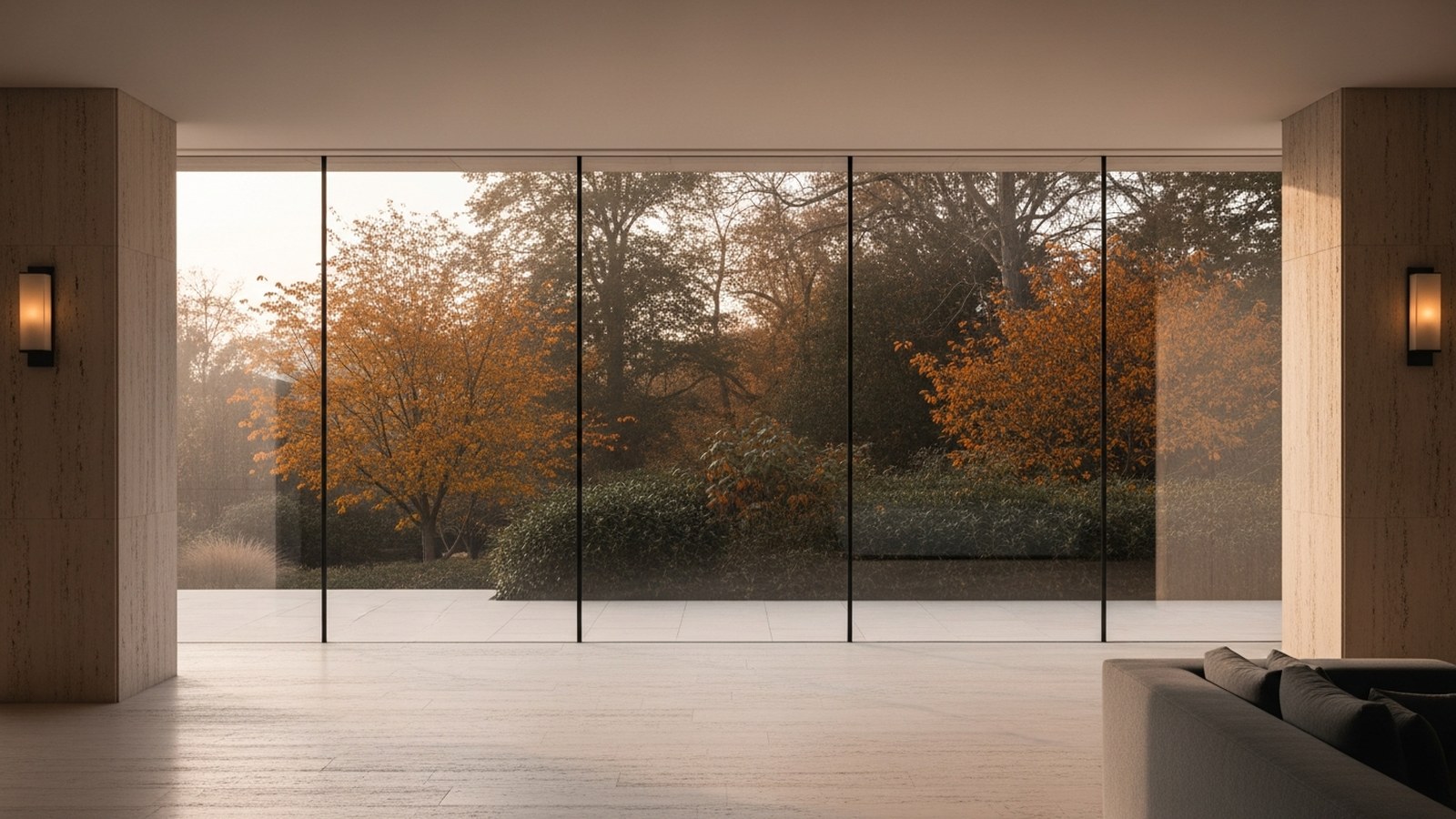
- Large expanses of view glass — homes built around unobstructed sightlines show every imperfection, so the tolerance for film is lower and the practical interval shorter.
The point is not that every home needs frequent cleaning. It is that the calendar should follow the exposure. A shaded home in a mild climate may do well on twice a year; an oceanfront home with irrigation and view walls will not.
The value of a vetted partner for this work
Timing is only half of a good result. The other half is the person doing the work knowing why the timing matters — reading the exposure on a specific house, scheduling around the sun on each elevation, using water and technique appropriate to hard-water spotting or salt film, and treating tracks and screens so the finish lasts. That judgment is what separates a clean that holds from one that streaks within a week.
Confirming that judgment, along with the training, licensing, and insurance behind it, is what the vetting process at Clean Freaks Co is built to do. An approved local partner is verified before they are ever introduced to a homeowner, so the person arriving at the house already understands the climate they are working in. For the full picture, see how we vet partners and insurance and accountability.
To begin
If you want to set the right window-cleaning cadence for your specific home and climate, the right starting point is the window cleaning coverage page, which describes the service, the markets covered, and the partners available. From there you can request a quote.

About Clean Freaks Co
Clean Freaks Co is a premier luxury home cleaning service company that has carved a niche in the cleaning industry with its top-tier services. With a keen focus on luxury homes, we ensure every detail is handled with the utmost care and precision, providing a level of service that goes above and beyond the norm.
Our services are comprehensive and tailored to meet the unique needs of luxury homes. We offer residential cleaning, carpet & floor cleaning, window cleaning, and exterior cleaning. Our team of professionals is committed to providing the highest level of service, ensuring your home is pristine and inviting.
We believe in using natural cleaning products that not only deliver exceptional results but also protect our clients and the environment. Our commitment to eco-friendly cleaning solutions is part of our mission to provide a clean and safe environment for luxury homeowners.
Clean Freaks Co operates in three major states, specifically in Atherton & Los Altos Hills, California; Paradise Valley, Arizona; and Jupiter Island & Golden Beach, Florida. We are proud to serve luxury homeowners in these areas and are dedicated to exceeding our clients' expectations with every service we provide.
Choosing Clean Freaks Co means choosing a team that understands the unique needs of luxury homes. Our attention to detail, commitment to using natural cleaning products, and dedication to providing a superior customer experience set us apart. We take pride in transforming luxury homes into pristine living spaces where our clients can relax and enjoy their surroundings.
For more information or to schedule a service, please contact us at skyler.salterra@gmail.com. We look forward to providing you with a clean and safe environment that you'll love.
Written and published by Clean Freaks Co. How the Journal is written and reviewed →