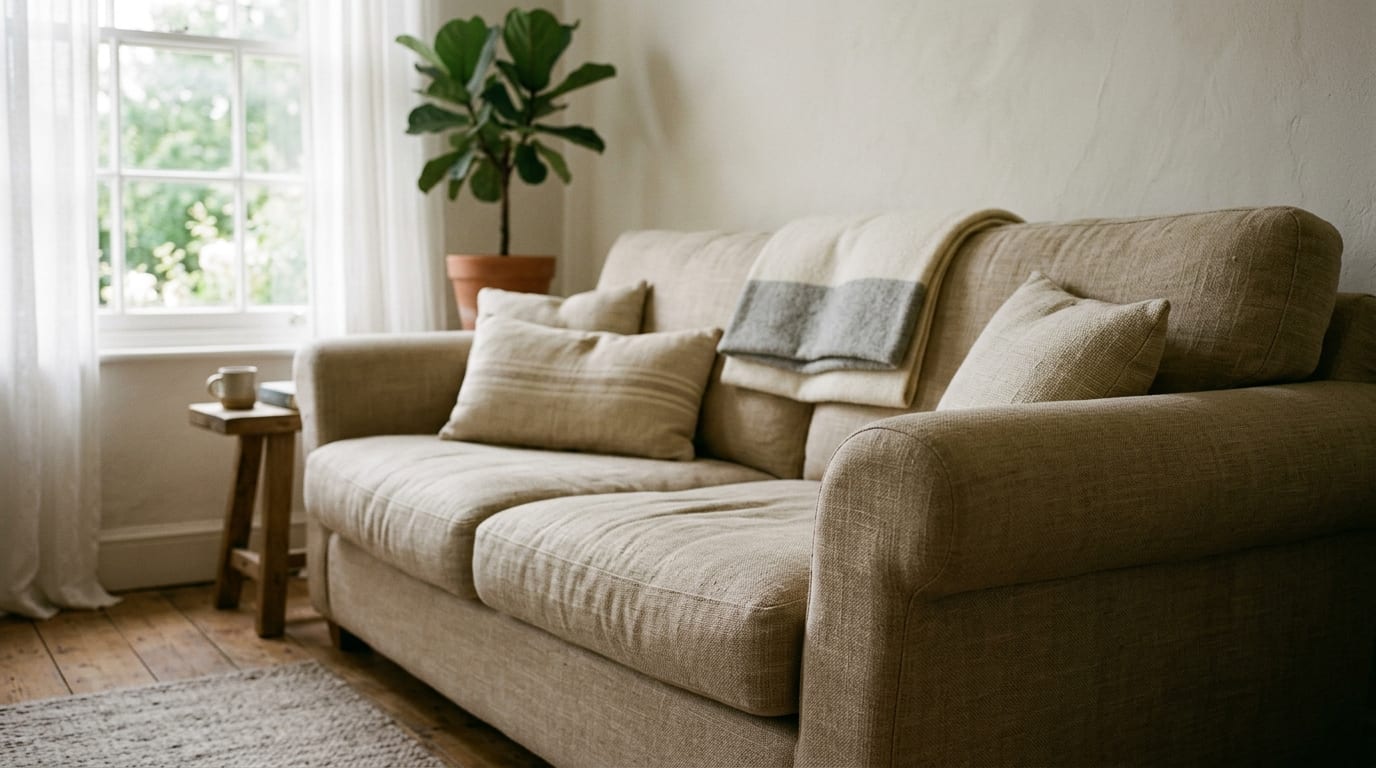
Upholstery Cleaning: Why the Fabric Code Comes Before the Chemistry
Before a single drop of cleaning solution touches upholstered furniture, one thing should be checked: the fabric cleaning code. It is a small tag with large consequences.
The code, and where to find it
Most upholstered furniture carries a manufacturer cleaning code, usually on a tag beneath a cushion or on the underside of the frame. It is a single letter, and it tells the cleaner what the fabric can tolerate:
- W — water-based cleaning is safe.
- S — solvent-based cleaning only; water will stain or shrink this fabric.
- WS — either water or solvent methods are acceptable.
- X — no liquid cleaning at all; vacuum and light brushing only.
Using a water-based method on an S-coded fabric can leave permanent watermarks or shrink the cover. The code is not a suggestion — it is the manufacturer telling you what will and will not survive.
When the code is missing
Designer-specification and antique upholstery often has no code, or a tag long since removed. A capable cleaner does not guess. They identify the fiber, test an inconspicuous area for colorfastness and water tolerance, and select the method from that — the same discipline a code would otherwise provide.
Fiber identification is a genuine skill. A competent upholstery cleaner can distinguish linen from cotton from a linen-cotton blend by texture and sheen, can identify a high-pile mohair versus a cut-pile velvet, and can recognize performance fabrics that carry no code because they were specified without the standard residential tag system. When there is no code, the cleaner’s knowledge of fiber behavior substitutes for it — which means the cleaner’s competence matters more, not less, in the absence of that label.
Natural fiber needs particular care
Linen, cotton, wool, and silk each behave differently, and natural fibers in general are less forgiving than synthetics. Linen watermarks readily. Silk is delicate and prone to sheen change. Wool reacts to alkaline cleaners. These are the fabrics where method selection matters most, and where a crew that cleans everything the same way does the most harm.
Wool upholstery is particularly susceptible to felting — an irreversible change in fiber structure caused by heat, agitation, or alkaline chemistry. A wool-coded piece should be cleaned with a pH-neutral or mildly acidic product, never with a high-pH detergent or steam at high temperature. The distinction is invisible to someone working from a generic protocol and obvious to someone who understands the fiber.
Synthetic and performance fabrics: a different set of rules
Performance fabrics — solution-dyed acrylics, polyester blends, and treatments like Crypton or Sunbrella — are designed for cleanability and are generally more forgiving. Most carry a W or WS code, and some are specifically engineered for wet extraction. But “cleanable” is not the same as “indestructible.” Even a performance fabric can be over-saturated, left too wet, or cleaned with a solvent that degrades the surface treatment. The method still matters; the tolerance window is simply wider.
Microfiber, often used in contemporary seating for its softness and apparent ease of care, is frequently coded S — solvent only — despite looking and feeling like a synthetic that would tolerate water. This surprises many homeowners and some cleaning crews. A water-based cleaning on a microfiber sofa can leave visible rings as the water migrates through the pile unevenly. If the tag is missing and the fiber looks like microfiber, assume S-coded until tested.
Sun exposure changes the picture
Seating placed in sun — common in homes with large glass walls — ages on a different curve. The sun-facing side of a sofa can be weaker and more faded than the back, and a method the fabric tolerated when new may be too aggressive for sun-degraded fibers years later. A good cleaner accounts for the wear they can see, not just the code on the tag.
The drying phase matters as much as the cleaning
Proper drying after upholstery cleaning is a step that is often underestimated. Upholstery that dries too slowly — in a humid room with no air circulation — is at risk for mildew growth in the batting or foam beneath the cover fabric, even if the cover itself is technically clean. A qualified cleaner will ensure adequate air movement after the visit, will advise on drying time before the piece is sat on, and will leave the fabric at the lowest practical moisture level before leaving. In high-humidity climates like coastal Florida, this is not a minor consideration.
Cushion covers and removable components
Some contemporary furniture designs have removable cushion covers with a separate care tag suggesting machine washing. This is worth approaching with caution even when the label permits it. Covers cut for a specific cushion insert can shrink marginally and no longer fit correctly, or can lose shape through machine agitation. Dry-cleaning or hand-spot cleaning is often the more conservative choice for a cover on an expensive piece, even if machine washing is technically within the manufacturer’s parameters.
Upholstery cleaning, matched to fabric and code, is part of what the carpet partners we work with handle. See carpet-cleaning coverage or request a quote.
Why trust this
Guidance held to a published standard.
Clean Freaks Co connects homeowners with upholstery and carpet cleaning across Arizona, California, and Florida through approved, insured local partners — partners whose cleaning protocols are reviewed against fiber manufacturer guidelines and who carry the liability coverage appropriate to working inside high-value properties.
The guidance in this Journal on fabric codes, fiber behavior, and cleaning chemistry follows manufacturer cleaning codes and professional trade sources including the IICRC, and defaults to the conservative method when sources are in tension. Read how the Journal is written and reviewed.
Questions
Frequently asked.
What does the S cleaning code mean, and why does water damage S-coded fabric?
The S code means solvent-based cleaning only — no water. Water damages S-coded fabrics because the fibers or dyes are not colorfast in water: water can cause the dye to migrate unevenly as it dries, leaving a visible ring or tide line. In some fabrics, water also causes the fibers themselves to pucker or stiffen. Dry-cleaning solvents evaporate more evenly and do not interact with the dye chemistry in the same way.
What should a cleaner do when there is no fabric code on a piece of furniture?
The standard professional approach is to identify the fiber visually and by feel, then perform a spot test in an inconspicuous area — typically the back of a cushion or the underside of a skirt — with a small amount of the proposed cleaning solution. The tester watches for color bleed, puckering, or sheen change before proceeding to the visible surfaces. A cleaner who skips this step on an unlabeled piece is taking a risk with your furniture.
Can a professional cleaner restore upholstery that was damaged by the wrong cleaning method?
Sometimes, but not always. Watermarks on S-coded fabric can sometimes be reduced by a careful dry-cleaning solvent treatment that re-wets the affected area evenly and allows it to dry uniformly. Felted wool or shrunken covers are generally not recoverable. The realistic answer is that some damage from incorrect cleaning is permanent — which is why the code exists and why it should be followed before any cleaning begins.
Why might a microfiber sofa be coded S when it looks like a synthetic that should tolerate water?
Microfiber is typically polyester or nylon split into ultra-fine filaments. Despite being synthetic, the split-fiber structure makes it prone to uneven water absorption — water migrates through the pile at different rates and dries leaving visible rings. Solvent-based cleaners evaporate more uniformly through that structure. If the tag is missing, test before assuming the sofa will behave like a plain polyester fabric.
How long should upholstered furniture be left to dry after professional cleaning?
For most W or WS-coded fabrics cleaned by hot-water extraction, allow four to six hours before sitting on the piece, and ensure good air circulation in the room during that time. In humid climates like coastal Florida, or if the piece has thick batting, overnight drying with a fan directed at the furniture is the conservative approach. Sitting on damp upholstery compresses the pile and can cause impressions or uneven drying patterns in the cover.
Related reading
More from the Journal.


For your home
Carpet care, matched to your home.
When the carpet in your home needs more than routine attention, we connect you with an approved local partner who knows the fiber, the traffic, and the standard your home keeps. See carpet cleaning coverage, or send the details and your local partner will be in touch.
Request a quote
About Clean Freaks Co
Clean Freaks Co is a premier luxury home cleaning service company that has carved a niche in the cleaning industry with its top-tier services. With a keen focus on luxury homes, we ensure every detail is handled with the utmost care and precision, providing a level of service that goes above and beyond the norm.
Our services are comprehensive and tailored to meet the unique needs of luxury homes. We offer residential cleaning, carpet & floor cleaning, window cleaning, and exterior cleaning. Our team of professionals is committed to providing the highest level of service, ensuring your home is pristine and inviting.
We believe in using natural cleaning products that not only deliver exceptional results but also protect our clients and the environment. Our commitment to eco-friendly cleaning solutions is part of our mission to provide a clean and safe environment for luxury homeowners.
Clean Freaks Co operates in three major states, specifically in Atherton & Los Altos Hills, California; Paradise Valley, Arizona; and Jupiter Island & Golden Beach, Florida. We are proud to serve luxury homeowners in these areas and are dedicated to exceeding our clients' expectations with every service we provide.
Choosing Clean Freaks Co means choosing a team that understands the unique needs of luxury homes. Our attention to detail, commitment to using natural cleaning products, and dedication to providing a superior customer experience set us apart. We take pride in transforming luxury homes into pristine living spaces where our clients can relax and enjoy their surroundings.
For more information or to schedule a service, please contact us at skyler.salterra@gmail.com. We look forward to providing you with a clean and safe environment that you'll love.
Written and published by Clean Freaks Co. How the Journal is written and reviewed →