Berber and Looped Wool: The Carpet That Punishes the Wrong Method
Berber and looped-wool carpet is among the most elegant flooring in a high-end home — and among the easiest to damage with the wrong cleaning method. Its construction is the reason for both.
What makes looped carpet different
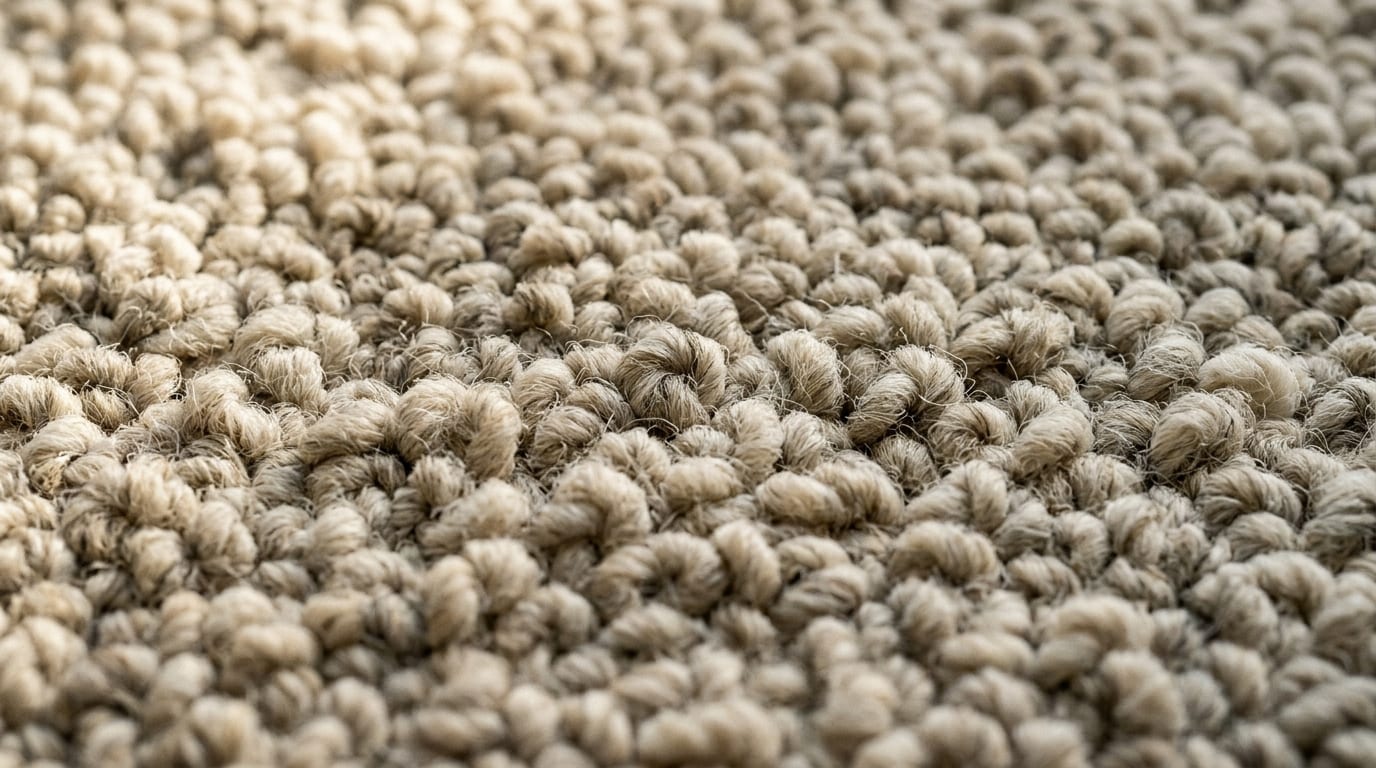
Most cut-pile carpet is exactly that: yarn cut at the tip, so each tuft stands as an independent strand. Berber and looped-wool carpet leaves the yarn uncut — a continuous loop runs across the surface. That construction gives the carpet its characteristic texture and durability underfoot. It also creates two specific vulnerabilities that a general cleaning crew can trigger.
The distinction matters at the equipment-selection stage, before a single drop of water or chemistry touches the floor. A crew familiar with synthetic cut-pile will reach for the same rotary wand and the same pressure settings they use on every job. Neither is appropriate here. Looped construction demands a different calculus at every step: equipment, solution concentration, dwell time, extraction rate, and drying management are all adjusted downward from what cut-pile tolerates.
Vulnerability one: snagging the loop
Because the loop is continuous, catching it can cause a run — the way a pulled thread runs through a knit sweater. Aggressive rotary equipment, a stiff brush, or a tool with an exposed edge can catch a loop and pull it. On cut-pile carpet that same equipment causes no such problem. The cleaner has to know the carpet is looped and select equipment that will not catch it.
The failure mode is not always immediately visible. A snagged loop may pull two or three inches before the tension is released, leaving a small tuft standing proud of the surface. In other cases the run travels further, drawing a line across the face of the carpet. Once a loop is broken the structural integrity of that row is compromised, and the damage is irreversible without re-tufting — a repair that is rarely seamless on patterned Berber. Prevention is the only realistic strategy.
Equipment with a smooth, gliding head — a hand tool run with light pressure or a CRB (counter-rotating brush) machine with soft brushes appropriate to the pile height — is the standard approach for looped carpet. Some technicians will hand-scrub the pile gently with a soft-bristle brush where agitation is needed, rather than relying on motorized equipment at all.
Vulnerability two: over-wetting
Looped wool is dense, and dense pile holds water. Saturate it with a standard hot-water extraction calibrated for synthetic cut-pile and the carpet stays wet far longer than it should. Slow drying invites two problems: wicking, where soil from the backing rises to the surface as moisture evaporates upward, and the brown staining — “brown-out” — that follows. A carpet that looked clean when the crew left develops brown patches over the next two days.
Brown-out is a pH reaction as well as a wicking issue. Natural wool contains inherent browning compounds — tannins and vegetative matter from the raw fiber — that alkaline cleaning chemistry can activate. This is distinct from wicking, though the two often appear together. A cleaner who does not account for wool’s sensitivity to alkaline products and over-saturation can produce browning through either mechanism or both simultaneously. The fix — re-treatment with an acidic rinse — is feasible if caught promptly, but it adds a return visit and still carries the risk of additional moisture.
How it should be cleaned
- Loop-safe equipment — no aggressive rotary action, nothing that can catch the loop.
- pH-appropriate chemistry — neutral to mildly acidic solutions rather than the alkaline chemistry calibrated for synthetic fiber.
- Controlled moisture — metered application rather than saturation, matched to the dense pile.
- Accelerated drying — airflow management to bring drying time down before wicking can start.
If a previous cleaning left your Berber slow to dry, or showing brown marks that were not there before, the method was wrong for the construction — not the carpet.
Fiber weight and regional climate
Wool weight and loop density vary considerably across manufacturers and quality tiers. A heavier wool broadloom in a Phoenix home faces a different drying challenge than the same carpet in a Miami home: Arizona’s low humidity means the evaporation phase happens faster, which reduces the wicking window. Florida’s ambient humidity extends that window significantly, making airflow management more critical and the drying timeline less predictable. A technician who works in both markets adjusts accordingly — one who works only in one climate may not think to ask.
California coastal homes — Newport Beach, Santa Barbara — sit in a similar position to Florida: marine layer and moderate humidity slow drying in ways a technician accustomed to inland desert conditions may not anticipate. The practical implication is that drying time estimates given in one climate should not be assumed in another.
What the inspection should establish
Before any work begins on looped-wool carpet, the technician should establish: the fiber content (wool, wool blend, or synthetic Berber), the loop diameter and pile height, the construction of the backing, whether any previous cleaning has caused browning or shrinkage, and the current moisture level in the backing. The last point matters because carpet laid over a damp pad — from a slow leak or high-humidity subfloor — will not dry safely no matter how carefully the surface is managed.
Berber and looped-wool capability is verified before a carpet partner is listed. See carpet-cleaning coverage or request a quote.
Why trust this
Guidance held to a published standard.
Clean Freaks Co connects homeowners with carpet cleaning across Arizona, California, and Florida through approved, insured local partners. Every partner in the carpet program is verified for looped-pile and natural-fiber capability before a referral is made — the inspection protocol and equipment requirements described here are part of the standard they are held to.
This Journal is written and reviewed to that same standard. Guidance on fiber behavior, chemistry, and method selection follows manufacturer documentation and trade-body sources (IICRC S100 and related standards) and defaults to the conservative approach when sources differ. Read how the Journal is written and reviewed.
Questions
Frequently asked.
Can hot-water extraction be used on Berber carpet at all?
Yes, but it requires significant modification from the settings used on cut-pile. Water temperature, pressure, and extraction rate are all reduced, dwell time is shortened, and the equipment head must be smooth rather than rotary. When those parameters are respected and drying is actively managed, hot-water extraction can be used safely on Berber. The mistake is applying cut-pile settings without adjustment.
What causes brown patches to appear after Berber carpet is cleaned?
Brown patches after cleaning are typically caused by wicking — soil from the backing migrating to the surface as moisture evaporates — or by a pH reaction in natural wool fiber triggered by alkaline cleaning chemistry. Both indicate that moisture was not controlled carefully enough. The patches can sometimes be addressed with a follow-up acidic rinse and proper drying, but the outcome is not guaranteed.
Is low-moisture cleaning always safer for looped carpet?
It reduces the over-wetting risk, which is a genuine advantage for looped wool. But low-moisture methods do not penetrate the base of a dense pile effectively, so they are better suited to light maintenance between deep cleans than to annual deep cleaning. A capable technician may recommend low-moisture for interim visits and controlled extraction for the annual deep clean, adjusting parameters for the specific carpet.
Can a snagged loop in Berber carpet be repaired?
Sometimes. A loop that has been pulled but not broken can occasionally be worked back into position. A loop that has separated or broken requires re-tufting — inserting a new strand into the backing — which is a skilled repair that rarely produces a completely invisible result on patterned carpet. Prevention is far more reliable than repair, which is why equipment selection matters so much before the job starts.
How often should Berber or looped-wool carpet be deep-cleaned professionally?
Most manufacturers recommend professional cleaning every twelve to eighteen months for looped-wool carpet in a well-maintained home. Households with pets, children, or high foot traffic generally benefit from a twelve-month cadence. In homes where the carpet sees light use and is vacuumed regularly, eighteen months is defensible. Waiting longer than that allows abrasive fine grit to accumulate at the base of the pile, where it cuts fiber from below with each footfall.
Related reading
More from the Journal.


For your home
Carpet care, matched to your home.
When the carpet in your home needs more than routine attention, we connect you with an approved local partner who knows the fiber, the traffic, and the standard your home keeps. See carpet cleaning coverage, or send the details and your local partner will be in touch.
Request a quote
About Clean Freaks Co
Clean Freaks Co is a premier luxury home cleaning service company that has carved a niche in the cleaning industry with its top-tier services. With a keen focus on luxury homes, we ensure every detail is handled with the utmost care and precision, providing a level of service that goes above and beyond the norm.
Our services are comprehensive and tailored to meet the unique needs of luxury homes. We offer residential cleaning, carpet & floor cleaning, window cleaning, and exterior cleaning. Our team of professionals is committed to providing the highest level of service, ensuring your home is pristine and inviting.
We believe in using natural cleaning products that not only deliver exceptional results but also protect our clients and the environment. Our commitment to eco-friendly cleaning solutions is part of our mission to provide a clean and safe environment for luxury homeowners.
Clean Freaks Co operates in three major states, specifically in Atherton & Los Altos Hills, California; Paradise Valley, Arizona; and Jupiter Island & Golden Beach, Florida. We are proud to serve luxury homeowners in these areas and are dedicated to exceeding our clients' expectations with every service we provide.
Choosing Clean Freaks Co means choosing a team that understands the unique needs of luxury homes. Our attention to detail, commitment to using natural cleaning products, and dedication to providing a superior customer experience set us apart. We take pride in transforming luxury homes into pristine living spaces where our clients can relax and enjoy their surroundings.
For more information or to schedule a service, please contact us at skyler.salterra@gmail.com. We look forward to providing you with a clean and safe environment that you'll love.
Written and published by Clean Freaks Co. How the Journal is written and reviewed →